The demand for high-quality printing has spurred the growth of the Roll to Roll UV Printer market. Recent industry reports indicate that the global UV printing market is expected to reach $9.5 billion by 2025. These printers are renowned for their efficiency and versatility, catering to various applications, from textiles to packaging.
According to industry expert Dr. James Lee, “Roll to Roll UV Printers have transformed the way businesses approach large-scale printing.” His insights highlight the significance of these printers in enhancing production capabilities and reducing costs. The adaptability of Roll to Roll UV Printers allows for diverse materials and finishes, making them a vital asset in today’s competitive landscape.
However, while Roll to Roll UV Printers offer numerous benefits, selecting the right model can be challenging. Features, print quality, and maintenance needs vary widely among brands. Businesses must carefully evaluate options to ensure they meet their specific quality standards and production goals. Making an informed choice can ultimately determine success in the fast-evolving world of printing.
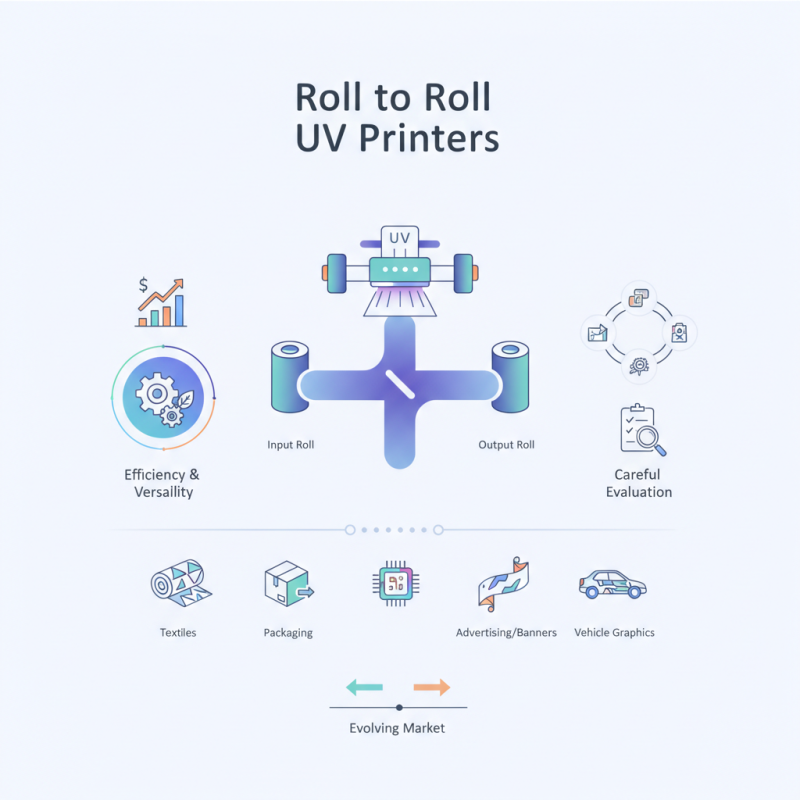
Roll to Roll UV printing technology has emerged as a game changer in the printing industry. This method uses ultraviolet light to cure inks as they are printed on flexible materials. According to a recent industry report, the global demand for UV printing is projected to grow by over 12% annually. This growth reflects its advantages, such as high-quality outputs and versatility across various substrates.
One significant benefit of Roll to Roll UV printing is its efficiency. The ability to print large volumes quickly without sacrificing quality makes it ideal for businesses. Additionally, the cured inks are durable, resistant to scratches and fading. This technology also consumes less energy and reduces waste, appealing to environmentally-conscious consumers. The flexibility in media types—from vinyl to textiles—further highlights its versatility.
Despite its advantages, challenges remain. Equipment costs can be high, posing barriers for smaller companies. Also, achieving perfect color accuracy requires skilled operators and calibration. As the industry continues to evolve, addressing these imperfections will be crucial for enhancing reliability and performance in Roll to Roll UV printing.
When selecting a roll to roll UV printer, several key features warrant careful consideration. Print quality stands out prominently. High resolution is essential for producing vibrant and intricate designs. Look for printers that excel in color accuracy and detail retention. Users often emphasize their dissatisfaction with printers that fall short in these aspects.
Another important aspect is the speed of production. Fast printing can significantly boost workflow efficiency. However, some users learn that speed can compromise quality. Balancing these two factors is crucial. Evaluate the efficiency of drying mechanisms, as they affect both speed and print integrity.
Material compatibility also plays a vital role in the decision-making process. Some printers handle a wider range of substrates, enhancing versatility. However, many find that printers optimized for specific materials often yield better results. Ensure you consider what materials you will frequently print on. This understanding helps avoid regrettable purchases. A careful assessment of features may lead to a more satisfactory printing experience.
When selecting a roll to roll UV printer, unique specifications play a critical role in meeting diverse printing needs. These printers excel in producing high-quality images on various substrates. They can handle different media types, including flexible materials and rigid surfaces. This versatility opens up a realm of opportunities for creative projects.
One key feature is the print resolution. A higher resolution ensures crisp images with vivid colors. Some printers offer resolutions exceeding 1200 dpi, which can make a significant difference in the final output. Temperature control is another consideration. It affects ink adhesion and print durability. Consistent temperature during printing can prevent smudging and ensure the longevity of printed materials.
Speed is important in any production environment. Some models can achieve impressive speeds, printing several meters per minute. However, speed shouldn't compromise quality. Finding a balance is essential. Additionally, user-friendly interfaces enhance operational efficiency. Users must consider their specific needs for software compatibility and features. The choice ultimately rests on weighing the importance of these varying specifications against intended usage.
| Printer Model | Max Print Width | Print Speed | Resolution | Unique Features |
|---|---|---|---|---|
| Model A | 63 inches | 120 sq ft/hr | 1200 x 1200 dpi | Dual ink configurations |
| Model B | 54 inches | 90 sq ft/hr | 600 x 600 dpi | Eco-friendly inks |
| Model C | 78 inches | 150 sq ft/hr | 2400 x 1200 dpi | Automated media feeding |
| Model D | 36 inches | 45 sq ft/hr | 1200 x 1200 dpi | UV LED curing technology |
| Model E | 48 inches | 100 sq ft/hr | 720 x 720 dpi | Smart switching technology |
When it comes to UV printers, print quality is paramount. A comparative analysis reveals significant differences among leading machines. Factors such as resolution, color accuracy, and substrate adaptability are key. Different printers handle these parameters in unique ways. Some excel at vibrant color reproduction, while others shine in fine detail.
Evaluating print quality involves more than just observing colors. Texture and finish are also crucial. A machine may produce brilliant colors but fail in delivering smooth gradients. Users often find themselves grappling with issues like banding or inconsistency in color output. These flaws can affect overall product perception.
In canvassing the market, users notice a trade-off between speed and quality. Some printers prioritize quicker production times at the cost of detail. Others maintain a slower pace but achieve unparalleled precision and vibrancy. This complex balance makes choosing the right machine a reflective process. Users must weigh their immediate needs against long-term expectations for quality output.
The roll-to-roll UV printing industry is experiencing significant growth. This trend is driven by the increasing demand for high-quality prints across various sectors. Industries such as packaging, textiles, and signage are leveraging this technology for its speed and versatility. Recent advancements in printing technology have enhanced the quality of output, making UV printers a popular choice.
Future projections indicate continued expansion in this market. More businesses are adopting roll-to-roll UV printers due to their efficiency and environmentally friendly features. However, some challenges remain. Not all manufacturers meet the same quality standards, leading to inconsistencies. It's crucial for buyers to evaluate print quality and reliability.
The ongoing improvements in ink formulations and curing processes also play a pivotal role. Companies are investing in research to develop more sustainable solutions. Some printers may struggle with color accuracy or adhesion on certain substrates. This area requires caution and thorough testing before final decisions are made. As the industry evolves, staying informed will be essential for ensuring optimal investment in technology.
We’re here to help and answer your questions.