The 2026 aluminium industries market will be judged by more than production volume. Buyers now examine energy sources, recycled content, delivery reliability, certification, and technical support. A low price is not always a low-cost decision.
The International Aluminium Institute reports that global aluminium demand could rise by nearly 80% by 2050. Its scenario work also stresses faster recycling and major emissions reductions. The U.S. Geological Survey estimated worldwide primary aluminium production at about 72 million metric tons in 2024. China remained the dominant producer, while the Middle East, India, Russia, Canada, and Australia strengthened their strategic importance. These figures offer useful scale, but they do not prove supplier quality. Data can hide regional energy risks, shipment delays, and inconsistent product specifications.
Miles Prosser, Secretary General of the International Aluminium Institute, has said, “Aluminium is essential to modern life, and the industry must reduce its environmental impact.” This principle should guide any worldwide supplier comparison. The strongest companies combine stable alloy performance with traceable sourcing, efficient smelters, and responsive customer service. Look closely at billet certificates, rolling tolerances, delivery records, and recycling claims. Ask difficult questions. Some sustainability statements remain difficult to verify.
This guide examines leading suppliers through production capacity, product range, geographic reach, financial resilience, and lower-carbon progress. It will not treat size as proof of excellence. A smaller regional producer may outperform a global giant in consistency or service. The ranking may still contain uncertainty, because market conditions change quickly. That limitation deserves attention.
2026 Best Aluminium Industries Suppliers Worldwide?
The global aluminium supplier landscape in 2026 is becoming more regional, transparent, and technically demanding. Buyers now compare primary aluminium, recycled content, extrusions, rolled products, and finished components. Price still matters, but it rarely tells the whole story. Energy sources, carbon reporting, refining capacity, and port reliability increasingly affect purchasing decisions.
Experienced buyers inspect more than product samples. They review mill test certificates, alloy tolerances, surface quality, packaging, and delivery records. A dependable supplier should explain billet origins and recycling percentages clearly. Third-party audits also provide useful evidence. However, public supplier rankings remain inconsistent. Some data is outdated, and “best” depends heavily on the application. A construction project may value volume and continuity, while aerospace-related manufacturing needs stricter documentation and narrow tolerances.
Tips: Request recent test reports, production photos, and sample packaging before signing a contract. Check whether certificates match the exact alloy and temper. Ask about backup smelters, ports, and inspection procedures. Small gaps matter. A delayed coil can stop an entire production line. Suppliers with strong technical teams often solve problems faster, even when their initial quotation is not the lowest. Still, buyers should challenge vague sustainability claims and verify emissions data through credible records. No supplier is perfect. Careful comparison remains necessary.
Global Aluminium Supplier Landscape in 2026
The chart compares estimated primary aluminium production by leading supplier countries. China remains the dominant source of global supply, while India, Russia, Canada, the United Arab Emirates, Bahrain, Australia, Norway, Brazil and Iceland represent important regional supply bases. Figures are 2024 estimates in thousand metric tonnes and serve as the latest comparable baseline for assessing the 2026 supplier landscape.
Source: U.S. Geological Survey, Mineral Commodity Summaries 2025, Aluminium, 2024 estimated production.
2026 Best Aluminium Industries Suppliers Worldwide?
Evaluating aluminium suppliers requires more than comparing quoted prices. The USGS Mineral Commodity Summaries 2025 estimated global primary aluminium production at about 72 million metric tons in 2024. Such scale creates choice, but also hides uneven quality. Buyers should verify alloy composition, temper, dimensional tolerance, and mill test certificates through independent laboratory checks. Evidence matters more.
Delivery reliability deserves equal attention. Ask for historical on-time performance, production capacity, backup power arrangements, and documented corrective actions. A supplier with modern equipment may still struggle during energy shortages or port disruptions. I would request sample coils, extrusion sections, and packaging photographs before approving a large contract. Small tests reveal practical weaknesses.
Environmental data must be specific. The International Energy Agency reports that aluminium production creates roughly 1.1 billion tonnes of annual carbon dioxide emissions, close to 3% of global emissions. Therefore, suppliers should provide product-level carbon footprints, recycled-content calculations, and energy-source records. The International Aluminium Institute’s decarbonisation pathway also highlights the importance of renewable electricity, inert anodes, and higher recycling rates. Claims need boundaries and verification. Numbers can mislead.
A credible supplier should maintain ISO 9001 quality systems, ISO 14001 environmental controls, worker-safety procedures, and traceable raw-material records. Certifications alone are not enough. Review audit dates, nonconformance reports, and customer references from similar applications. The “best” supplier is not always the largest or cheapest. It is the one whose technical promises, shipment records, and environmental evidence survive careful scrutiny. Mistakes still happen. The evaluation process should admit that.
European suppliers usually compete through engineering quality, recycled content, and strict documentation. They serve automotive, rail, renewable energy, and architectural markets. Their quotations may include detailed specifications for temper, thickness, coating, and carbon reporting. This improves traceability, although smaller orders can cost more.
North American suppliers often focus on aerospace-grade materials, industrial plate, packaging foil, and specialized extrusions. Regional stockholding can shorten delivery times and reduce supply disruption.
2026 Best Aluminium Industries Suppliers Worldwide?
For 2026 sourcing, product quality should be measured beyond a polished sample. Check alloy chemistry, tensile strength, dimensional tolerance, surface finish, and batch traceability. The International Aluminium Institute reported global primary aluminium production of about 72.9 million tonnes in 2023. This scale makes process consistency more important than impressive capacity claims.
Ask suppliers for current ISO 9001 records, laboratory calibration evidence, and independent test reports. Environmental controls matter too. ISO 14001 supports systematic management, while ISO 45001 addresses worker safety. The Aluminium Stewardship Initiative’s standards also assess emissions, water, biodiversity, human rights, and responsible sourcing. Certificates help. They do not replace factory audits. A document can be valid, yet outdated.
Sustainability should include measurable carbon data. The International Aluminium Institute estimates aluminium production creates roughly 1.1 billion tonnes of greenhouse-gas emissions annually. Recycling aluminium can use around 95% less energy than primary production, according to the Institute. Request recycled-content percentages, energy sources, and product carbon footprints per tonne. Capacity deserves equal scrutiny: inspect furnace availability, extrusion lines, backup power, and delivery records. The International Energy Agency expects aluminium demand to rise substantially by 2050, increasing pressure on low-carbon supply. Some supplier disclosures remain incomplete. That weakness deserves questions, not assumptions. A reliable partner can show corrective actions, not just attractive promises.
| Evaluation Dimension | Data Point | Recommended Evidence | International Reference or Standard | Supplier Screening Requirement | 2026 Purchasing Interpretation |
|---|---|---|---|---|---|
| Product Quality | Chemical composition control | Current material certificates showing alloy designation, temper, batch number, chemical composition, and test results. | Applicable EN, ASTM, ISO, or JIS alloy specifications, depending on the destination market and product type. | Require traceability from raw material to finished product and retain batch-level documentation. | Suitable for applications where alloy consistency, corrosion resistance, weldability, or conductivity is critical. |
| Product Quality | Dimensional accuracy | Inspection reports covering thickness, width, diameter, length, flatness, straightness, and tolerance compliance. | Relevant product standards such as EN 485 for aluminium sheet and plate or EN 755 for aluminium extruded products. | Confirm measurement equipment calibration and define acceptance tolerances in the purchase contract. | Lower dimensional variation reduces machining losses, installation problems, and production downtime. |
| Product Quality | Mechanical performance | Tensile strength, yield strength, elongation, hardness, and conductivity test results where applicable. | Product-specific EN, ASTM, ISO, or JIS testing requirements. | Ask for independent laboratory results or verifiable in-house laboratory accreditation. | Important for automotive, aerospace, construction, electrical, and pressure-related applications. |
| Certifications | Quality management | Valid third-party certificate, certificate number, scope, issuing body, and expiry date. | ISO 9001:2015 quality management system. | Verify that the certificate scope includes the actual aluminium products and manufacturing site. | A valid certificate supports process control but does not replace product-specific testing or inspection. |
| Certifications | Environmental management | Environmental policy, legal-compliance records, environmental objectives, and audit documentation. | ISO 14001:2015 environmental management system. | Prefer suppliers with measurable targets for energy, emissions, water, waste, and process residues. | Useful for supplier qualification, ESG reporting, and customer sustainability requirements. |
| Certifications | Occupational health and safety | Safety management certificate, incident statistics, training records, and corrective-action reports. | ISO 45001:2018 occupational health and safety management systems. | Review recordable incident trends and verify that certification covers the production location. | Indicates a more controlled operating environment and lower operational disruption risk. |
| Certifications | Responsible aluminium sourcing | Third-party assurance covering responsible production, human rights, biodiversity, governance, and supply-chain due diligence. | Aluminium Stewardship Initiative Performance Standard and Chain of Custody Standard. | Confirm certification status, certified facilities, product scope, and chain-of-custody model. | Particularly relevant to construction, transportation, consumer goods, and publicly reported ESG programs. |
| Production Capacity | Primary aluminium capability | Annual nameplate capacity, actual output, operating utilization, smelter location, and expansion schedule. | Capacity figures should be supported by audited reports, official production records, or independently verified disclosures. | Separate primary aluminium production from recycled metal, billet, slab, sheet, foil, and extrusion capacity. | Large primary capacity can improve metal availability, but it does not automatically confirm finished-product capability. |
| Production Capacity | Semi-finished product capacity | Annual rolling, extrusion, forging, casting, finishing, and fabrication capacity by plant. | Facility-specific capacity statements and product-standard compliance records. | Check whether capacity is dedicated, shared, seasonal, or dependent on external conversion partners. | For regular procurement, plant-level capacity and lead time are often more relevant than national production volume. |
| Production Capacity | Supply continuity | Lead time, minimum order quantity, safety stock, multi-site production, business-continuity plan, and logistics routes. | Contractual service-level agreements, supplier risk assessments, and documented continuity procedures. | Request a contingency plan for energy interruptions, transport disruption, raw-material shortages, and geopolitical risk. | Suppliers with geographically diversified production generally provide stronger resilience for global purchasing programs. |
| Sustainability | Carbon intensity | Product carbon footprint covering defined boundaries, methodology, assumptions, and verification statement. | ISO 14067 for product carbon footprints; ISO 14064-1 for organizational greenhouse-gas inventories; GHG Protocol guidance. | Compare suppliers only when system boundaries, allocation methods, recycled content, and electricity factors are consistent. | Low-carbon aluminium claims should be supported by transparent, independently reviewed data rather than marketing statements alone. |
| Sustainability | Renewable electricity use | Share of renewable electricity, power-purchase agreements, energy attribute certificates, and site-level consumption data. | GHG Protocol Scope 2 Guidance and recognized energy-accounting practices. | Distinguish on-site renewable generation, contracted renewable power, and unbundled certificates. | Electricity sourcing is a major differentiator for primary aluminium because smelting is highly electricity-intensive. |
| Sustainability | Recycled aluminium content | Pre-consumer and post-consumer recycled content, scrap origin, mass-balance method, and chain-of-custody records. | ISO 14021 environmental claims principles and applicable recycled-content verification schemes. | Require a clear definition of recycled content and distinguish recycled metal from low-carbon primary metal. | Higher recycled content can reduce embodied emissions, although quality, alloy separation, and availability must be assessed. |
| Sustainability | Bauxite residue and waste management | Residue storage design, monitoring data, rehabilitation plan, hazardous-waste controls, and incident history. | Applicable national environmental regulations and recognized responsible-mining requirements. | Review dam or storage-facility governance, emergency planning, inspection procedures, and closure funding. | Strong residue management is essential when evaluating vertically integrated bauxite, alumina, and aluminium suppliers. |
| Commercial Reliability | Traceability and documentation | Unique heat or batch identification, mill certificates, inspection records, origin declaration, and shipment documents. | Applicable customs, conflict-minerals, forced-labour, product-safety, and due-diligence regulations. | Verify that traceability continues through subcontractors, traders, warehouses, and conversion facilities. | Complete documentation reduces customs delays, recall exposure, and non-compliance risk in international transactions. |
| Commercial Reliability | Total cost of ownership | Metal premium, conversion cost, freight, packaging, duties, inspection cost, scrap rate, and payment terms. | Contract-specific commercial terms and internationally agreed delivery rules such as Incoterms. | Evaluate delivered cost and quality-adjusted cost rather than relying only on the quoted aluminium price. | The best supplier is usually the one that combines consistent quality, reliable delivery, transparent data, and competitive total cost. |
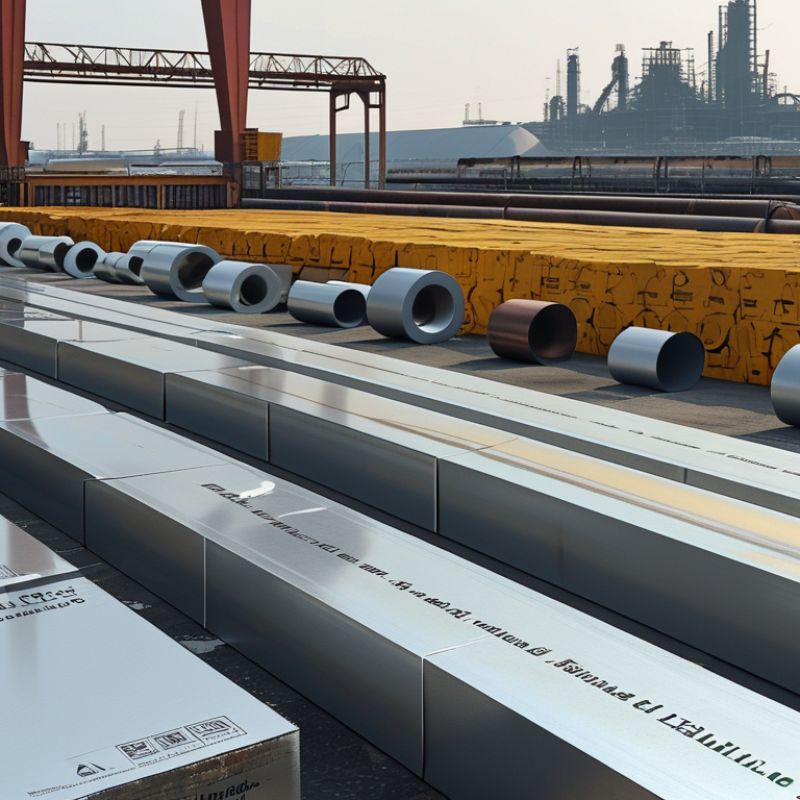
Choosing an aluminium supplier starts with your application, not a sales brochure. Define the alloy, temper, thickness, width, surface finish, and tolerance requirements. A supplier should explain how each specification affects strength, machinability, corrosion resistance, and cost. Ask for recent test reports, material certificates, and clear batch traceability. Vague paperwork is a warning sign.
Request samples that match your planned production method. Test them under realistic conditions, including cutting, bending, welding, or anodizing. Check whether the delivered dimensions remain consistent across several pieces. One attractive sample proves little.
Production capacity matters too. Review equipment, quality controls, inspection frequency, minimum order quantities, and typical lead times. Confirm packaging standards before shipment, especially for long profiles or sensitive surfaces.
Communication reveals operational maturity. A dependable supplier answers technical questions directly and admits limitations when necessary. Verify whether it can maintain supply during demand changes.
Discuss replacement procedures, nonconforming material, payment terms, and transport responsibility in writing. Independent audits or recognized certifications can support your assessment, but certificates should be verified and kept current. Cheap material may become expensive after scrap, delays, and rework. I have found that buyers sometimes overvalue a low quotation and undervalue stable tolerances. That judgment can be wrong. Recheck the supplier against your actual production data.
We’re here to help and answer your questions.