How to Choose the Right Flexible Busbar for Global Sourcing?

Global electrification is increasing demand for compact, reliable power distribution components. The International Energy Agency’s Global EV Outlook 2024 recorded nearly 14 million electric car sales in 2023. Battery production, charging infrastructure, and industrial automation now require efficient connections inside tight enclosures. This is where Flexible Busbar solutions can offer clear advantages. They reduce wiring congestion, support controlled bending, and simplify installation around batteries, switchgear, and busbar chambers. Space matters.

However, global sourcing requires more than comparing copper prices. The IEA’s Electricity 2024 report projected global electricity demand growth of about 3.3% annually from 2024 to 2026. That growth increases pressure on manufacturers to secure stable, scalable, and traceable electrical components. A buyer should examine conductor material, current rating, insulation system, bend radius, temperature rise, plating quality, and manufacturing tolerances. Supplier experience also matters, especially when samples must survive vibration, thermal cycling, and repeated assembly changes.

Relevant compliance should be verified against the final application. IEC 61439 may apply to low-voltage switchgear assemblies, while UL requirements may matter in North American projects. Certification claims deserve independent confirmation. A spreadsheet cannot reveal every production risk. Flexible Busbar performance depends on design details, not attractive catalog language. I have seen sourcing decisions favor the lowest quotation, then lose time through inconsistent hole positions, weak insulation, or delayed testing. A stronger process compares tested samples, factory controls, documentation, logistics capacity, and total delivered cost. The right choice is rarely the cheapest option. It is the option that remains reliable across real operating conditions and international supply constraints.
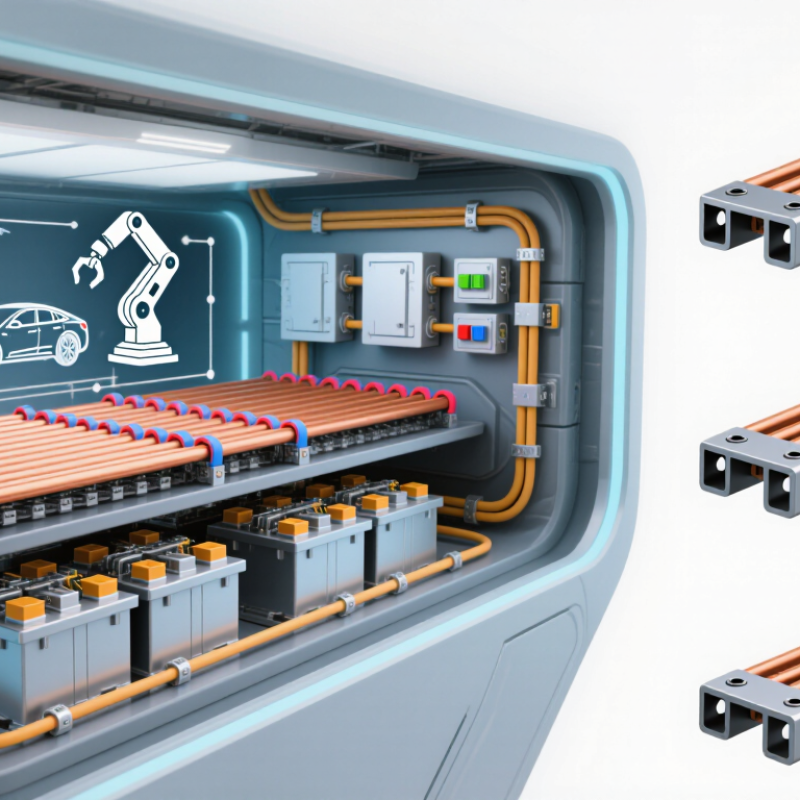
How to Choose the Right Flexible Busbar for Global Sourcing?

Defining Flexible Busbars and Their Core Electrical Functions

A flexible busbar is a flat electrical conductor designed to carry and distribute power inside equipment. It commonly uses layered copper or aluminum, with insulation added for safety and spacing control. Unlike a round cable, its flat profile can bend, twist slightly, and fit into narrow assemblies.

Its core electrical function is reliable current transfer. The conductor must maintain low resistance across its full length and through every connection point. A wider contact area can reduce voltage drop and limit heat generation. However, shape alone does not ensure performance. Engineers must verify current rating, operating voltage, short-circuit withstand, insulation class, and allowable temperature rise.

Small details matter. A poorly tightened terminal can create a hot spot within minutes.

Practical sourcing requires more than a product drawing. I have seen a compact busbar appear suitable, yet run hotter than expected during load testing. That mistake was mine. The evaluation missed the effect of enclosure temperature and repeated bending. Request conductor dimensions, material data, insulation thickness, bend radius, test conditions, and applicable electrical standards. Check whether the stated current applies to continuous operation or brief peaks. Ask for sample testing under realistic airflow and connection conditions. A flexible busbar should not only fit the assembly; it should carry power consistently after installation, movement, and thermal cycling.

Assessing Material, Design, and Performance Requirements

Selecting a flexible busbar for global sourcing requires more than comparing copper prices. Material choice affects conductivity, weight, corrosion resistance, and thermal stability. The International Energy Agency reported that annual grid investment must exceed USD 600 billion by 2030, nearly twice 2022 levels. This pressure makes reliable, scalable components increasingly important.

Copper remains suitable for high-current assemblies because it offers excellent conductivity and mechanical strength. Aluminum can reduce weight and material cost, but it needs careful joint design and surface protection. Check the conductor cross-section, insulation temperature rating, plating thickness, and minimum bending radius. A busbar that bends easily during assembly may still fatigue under repeated movement. Design verification should follow the applicable requirements of IEC 61439, especially for temperature rise, short-circuit withstand, and clearances. Laboratory data matters more than a polished quotation. Sometimes, it is incomplete.

Tips: Request test reports for current capacity, heat rise, insulation resistance, and vibration endurance. Confirm whether testing used the final length, terminal structure, and enclosure. Ask for material certificates and traceability records. For copper, verify purity and plating adhesion. For aluminum, inspect oxide-control methods at contact points. Do not compare ampacity figures from different test conditions; this is a common sourcing mistake. A 2024 grid investment report may show strong market demand, but it cannot replace application-specific validation. Check twice.

Comparing Standards, Certifications, and Safety Specifications

Choosing a flexible busbar for global sourcing requires more than comparing copper purity or price. The key question is whether its construction matches the installation standard. IEC 61439 is important for assemblies, while regional rules may add requirements for insulation, creepage, and clearance. A supplier should provide current test reports, not only a certificate image.

Check the rated voltage, current, temperature rise, short-circuit withstand, and insulation class. These figures must reflect the complete busbar system, including joints and protective covers. Ask how the product performs after repeated bending. A tight bend radius can damage insulation, even when the copper remains intact. Small details matter.

Certifications can support trust, but they do not replace engineering review. Verify whether testing came from an accredited laboratory and whether the report matches the exact material, size, and production site. Also review RoHS and REACH documentation when importing into regulated markets. Some documents may be outdated. That is easy to miss.

Safety specifications should include flame resistance, touch protection, IP rating, operating temperature, and torque requirements. Request installation drawings with measurable tolerances. During sample inspection, check edge finishing, insulation cuts, marking clarity, and connector alignment. A supplier may meet one standard but interpret another loosely. Local approval should be confirmed before production, because global compliance is rarely automatic.

Evaluating Suppliers, Customization Options, and Production Capabilities

How to Choose the Right Flexible Busbar for Global Sourcing?

Choosing a flexible busbar supplier requires more than comparing unit prices. Review copper or aluminum specifications, insulation materials, plating options, and documented test methods. Ask for sample reports covering conductivity, temperature rise, bend cycles, and dielectric strength. Reliable suppliers should explain material traceability from incoming inspection to final packing. Request recent production photos and audit records. A clean workshop matters. So does clear communication.

Customization often determines project success. Confirm the required length, hole pattern, bend radius, connector shape, and insulation color. Share accurate drawings, tolerances, and installation conditions. Suppliers with skilled engineers can recommend changes that reduce stress near terminals. However, recommendations should be tested, not accepted automatically. A small design revision may affect tooling, lead time, and cost. No checklist is perfect. I would still verify critical dimensions on received samples.

Tips: Compare at least three suppliers using the same technical requirements. Request a pilot batch before mass production. Check whether the factory owns suitable cutting, punching, forming, welding, and insulation equipment. Ask about daily capacity, backup machinery, operator training, and quality checkpoints. Production claims can sound impressive, but measurable evidence is better. Keep communication records, approval samples, and inspection results together. This makes problems easier to trace across borders.

Planning Global Sourcing, Quality Control, and Delivery Management

How to Choose the Right Flexible Busbar for Global Sourcing?

Planning Global Sourcing, Quality Control, and Delivery Management

When planning global sourcing, start with the electrical duty, not the lowest quotation. Record continuous current, peak current, voltage, operating temperature, and available bend radius.

Specify copper grade, plating, insulation, hole pattern, thickness, and finished length. Drawings must show tolerances. That detail prevents costly interpretation gaps.

Ask suppliers for material certificates, sample data, and process capability records. Certificates alone are not enough.

Quality control should combine documented procedures with physical verification. Inspect the first articles before approving mass production.

Check dimensions, hole positions, surface finish, insulation coverage, and bend performance. Electrical tests may include resistance, dielectric withstand, and temperature-rise evaluation.

Use calibrated tools and retain inspection photographs. A practical sampling plan can reduce risk, but it cannot replace critical-item checks.

One weakness remains: suppliers may report results under different test conditions. Require clear methods, equipment details, and acceptance limits.

Delivery management begins before the purchase order. Confirm production lead time, inspection dates, packing standards, export documents, and transport responsibilities.

Use staged approvals for drawings, samples, and final inspection. Add reasonable schedule protection for customs delays and port congestion. Global freight can change quickly.

Keep approved backup materials and alternative production capacity where possible. We once treated packaging as an afterthought. That was a mistake.

Crushed insulation can invalidate an electrically sound product. Now, packaging must protect bend areas, terminals, and plated surfaces during handling.

Enquire Now

We’re here to help and answer your questions.