How to Choose the Right Fuel Transfer Pump?
Choosing the right Fuel Transfer Pump begins with understanding the job, not chasing the highest advertised flow rate. A pump serving a small workshop has different needs from one supporting farm equipment, service vehicles, or construction machinery. Fuel type, tank size, transfer distance, power supply, and daily usage all affect performance. A diesel pump may not suit gasoline applications, even when the connection appears identical. Safety matters.
Small details matter.
This guide explains how to compare flow rate, pressure, compatibility, filtration, hose length, and automatic shutoff features. It also considers installation conditions, including outdoor exposure, temperature changes, and limited electrical access. Experienced maintenance teams usually check the manufacturer’s specifications before selecting accessories. They do not rely on appearance alone. A compact pump can be efficient, while a larger model may waste energy or create unnecessary strain. That assumption fails.
Real-world selection is rarely perfect. Available space may limit the ideal model, and budget restrictions can influence the final decision. However, reducing cost by ignoring filtration or grounding requirements can create expensive maintenance problems later. Reliable suppliers should provide clear technical data, operating instructions, warranty information, and appropriate safety guidance. Independent reviews can help, but they should not replace professional judgment or manufacturer documentation. When uncertainty remains, consult a qualified technician familiar with fuel-handling equipment. This approach supports dependable transfers, protects connected machinery, and helps operators choose equipment suited to genuine working conditions.
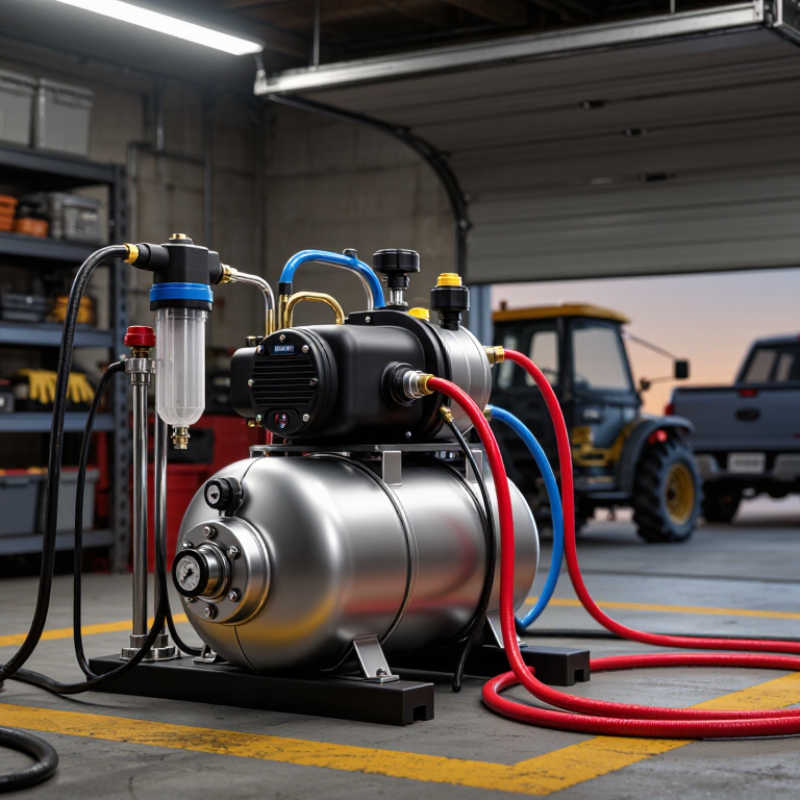
Understanding Fuel Transfer Pump Types and Applications
How to Choose the Right Fuel Transfer Pump?
Fuel transfer pumps differ in structure, flow control, and working conditions. Rotary vane pumps suit routine diesel transfer and provide steady output. Gear pumps handle thicker fluids but may require careful filtration. Diaphragm pumps tolerate dry conditions better, although their flow can feel less consistent. Centrifugal pumps move large volumes efficiently, yet they usually need priming. That detail is easy to overlook.
Match the pump to the application, not only the advertised flow rate. A farm tank may need moderate flow and long operating cycles. A service vehicle may require compact size, quick connection, and dependable battery operation. Check fuel compatibility, viscosity, temperature range, and duty cycle.
Also measure the hose length and vertical lift. Pressure losses increase with narrow hoses and restrictive filters. Small details matter.
Safety should guide every specification. Use components rated for the intended fuel and environment. Confirm grounding, ventilation, leak control, and automatic shutoff features. A clean strainer protects the pump from rust and sediment. However, filters can become restrictive when neglected. No selection is perfect. In practice, users sometimes choose excessive capacity, expecting faster transfer. That can increase splashing, wear, and electrical demand. Reviewing actual daily volume often produces a quieter, more reliable setup. Check the installation manually before regular operation, because a technically correct pump can still perform poorly when positioned incorrectly.
Matching Pump Flow Rate and Pressure to Your Fueling Needs
How to Choose the Right Fuel Transfer Pump?
Pump selection begins with two numbers: required flow rate and working pressure. Calculate flow before comparing equipment. A 120-gallon tank filled within six minutes needs about 20 gallons per minute. Allow extra capacity for filter loading, cold fuel, and hose resistance. Faster is not always better.
NREL infrastructure studies for medium- and heavy-duty vehicles commonly model diesel dispensing around 20–30 gallons per minute. Smaller maintenance tanks may need only 5–15 gallons per minute. The U.S. Department of Energy’s Alternative Fuels Data Center also emphasizes matching fueling equipment with vehicle type, storage volume, and operating time. These figures are planning references, not universal rules.
Pressure must overcome elevation, hose length, filters, valves, and nozzle restrictions. A pump showing high maximum pressure may still perform poorly at the nozzle. Check the pressure at the actual delivery point, not only at the pump outlet. Include a bypass or relief system where required by the installation design. I once treated advertised flow as usable flow. That shortcut failed after the filter became dirty. Measure the system under load. Tank height matters, too. Excessive suction lift can cause vapor formation, unstable flow, and premature wear. Verify fuel compatibility, temperature range, duty cycle, and electrical requirements against recognized safety guidance, including applicable NFPA and local installation standards.
How to Choose the Right Fuel Transfer Pump? - Matching Pump Flow Rate and Pressure to Your Fueling Needs
| Fueling Requirement | Typical Fuel | Recommended Flow Rate | Typical Working Pressure | Power Supply | Recommended Duty | Suitable Applications and Selection Notes |
| Light-duty mobile fueling | Diesel | 20–30 L/min
(5–8 US gal/min) | 2–3 bar
(29–44 psi) | 12 V or 24 V DC | Intermittent | Suitable for small generators, compact tractors, construction equipment and service vehicles. A lower flow rate helps reduce battery load and is normally adequate for tanks below approximately 200 L. |
| Standard equipment fueling | Diesel | 35–50 L/min
(9–13 US gal/min) | 3–4 bar
(44–58 psi) | 12 V or 24 V DC | Intermittent to moderate | A practical range for farms, workshops and mixed equipment fleets. It provides a good balance between fueling speed, hose length and electrical demand. |
| Fleet and commercial fueling | Diesel | 50–80 L/min
(13–21 US gal/min) | 3.5–5 bar
(51–73 psi) | 230 V AC or 24 V DC | Moderate to frequent | Recommended for delivery trucks, buses and larger off-road equipment. Confirm that the tank, filter, meter, nozzle and hose can handle the selected flow rate. |
| High-throughput fleet fueling | Diesel | 80–120 L/min
(21–32 US gal/min) | 4–6 bar
(58–87 psi) | 230 V AC or 400 V AC | Frequent or continuous with cooling | Designed for high-volume depots and large fleet tanks. Use only when the electrical system, pipework, filtration and automatic shut-off equipment are rated for the higher capacity. |
| Low-flow gasoline transfer | Gasoline or petrol | 20–40 L/min
(5–11 US gal/min) | 2–3.5 bar
(29–51 psi) | Approved AC or DC equipment | Intermittent | Use only a pump specifically approved for gasoline and other flammable liquids. Select equipment with suitable electrical protection, grounding and vapor-control provisions for the installation area. |
| Aviation or specialty fueling | Approved aviation fuel | 30–80 L/min
(8–21 US gal/min) | 2.5–5 bar
(36–73 psi) | Approved AC or DC equipment | According to operating procedure | Requires fuel-compatible materials, fine filtration, bonding and grounding, water-control measures and compliance with the applicable aviation-fueling requirements. |
| Gravity-assisted transfer | Diesel or approved low-viscosity fuel | 10–25 L/min
(3–7 US gal/min) | 0.5–1.5 bar
(7–22 psi) | 12 V, 24 V DC or manual | Occasional | Suitable where moderate fueling speed is acceptable and the installation has limited power. The pump must still overcome elevation, hose friction, filter resistance and nozzle losses. |
Selection note: The flow rates and pressures shown are representative design ranges rather than specifications for a particular product. Actual performance decreases as hose length, elevation, filters, meters and nozzles add resistance. Choose a pump approved for the fuel type, verify compatibility with the tank and accessories, and follow all applicable electrical, fire-safety and environmental requirements.
Checking Fuel Compatibility, Power Source, and Installation Requirements
How to Choose the Right Fuel Transfer Pump?
Checking fuel compatibility is the safest starting point. Fuel characteristics differ in viscosity, additives, temperature range, and chemical behavior. Confirm that the pump body, seals, hoses, and fittings suit the exact fuel. Check the technical sheet, not appearance or smell. I once assumed two similar fuels were interchangeable. That assumption was wrong. Ethanol-containing fuel, for example, may require different sealing materials. Keep the fuel specification available during selection.
Power source must match the working environment. A 12-volt pump needs suitable battery capacity, correct wiring, and protection against overload. An AC model requires the correct voltage, frequency, grounding, and a properly rated outlet. Power must match the site. A pump that starts well may still overheat during continuous transfer. Check duty cycle, cable length, switch location, and emergency shutoff access. These details are easy to overlook.
Installation requirements affect both performance and safety. Measure the inlet and outlet distance before ordering hoses. Keep the suction line short, supported, and free from sharp bends. Install the recommended filter and avoid unnecessary adapters. The mounting surface should remain stable during operation. Provide ventilation where required, and follow applicable electrical, fire, and storage regulations. Test connections with a controlled inspection before regular use. Small leaks matter. I would also leave extra space for maintenance, because a perfect installation becomes frustrating when the filter cannot be reached.
How to Choose the Right Fuel Transfer Pump?
Checking fuel compatibility, power source, and installation requirements is essential before selecting a transfer pump.
Chart basis: The values show the calculated shaft power required to transfer 40 L/min through a 20 m total dynamic head at 50% efficiency. The calculation uses P = ρ × g × Q × H ÷ η. Representative fuel densities at 15 °C are used: gasoline 740 kg/m³, diesel 835 kg/m³, kerosene 800 kg/m³, and E10 gasoline 750 kg/m³.
Fuel compatibility: Confirm that the pump body, seals, hoses, and electrical components are rated for the selected fuel. Alcohol-blended fuels such as E10 require materials that resist ethanol-related swelling and degradation.
Power and installation: Select a motor with sufficient capacity above the calculated requirement, then verify the available 12 V DC, 24 V DC, 120 V AC, or 230 V AC supply. Use correctly sized hoses, a suitable strainer, overcurrent protection, grounding and bonding where required, and installation equipment approved for the applicable hazardous location.