Rmu Switchgear, or ring main unit switchgear, supports reliable medium-voltage power distribution in compact spaces. It commonly serves apartment buildings, factories, hospitals, renewable energy sites, and utility networks. Its sealed metal enclosure protects switching equipment from dust, moisture, and accidental contact. That practical protection matters where floor space is limited and service interruptions are costly.
This guide introduces common RMU types, including air-insulated, gas-insulated, and solid-insulated designs. Each type has different installation needs, maintenance requirements, environmental considerations, and operating costs. Load-break switches control normal current, while circuit breakers provide stronger fault protection. Fuses may support transformer protection in simpler arrangements. Engineers normally assess voltage ratings, fault levels, automation options, earthing methods, and local utility requirements before selecting equipment.
Real-world experience shows that compact equipment is not automatically easier to manage. A unit beside a transformer may save valuable space, yet poor cable access can complicate maintenance. Gas-insulated models often reduce their footprint, but responsible specification must consider service procedures and environmental expectations. Solid-insulated alternatives can offer another path, although their long-term suitability depends on design quality and site conditions.
Reliable selection requires more than comparing brochures. Qualified engineers should review manufacturer test data, relevant IEC standards, protection coordination, and installation records. Site operators also need clear switching instructions and trained personnel. Small details matter. A neglected indicator, damaged cable termination, or unclear label can undermine an otherwise robust system. This article explains the main RMU uses and benefits while recognising that no single design fits every network. Some assumptions may change as technology and regulations develop.
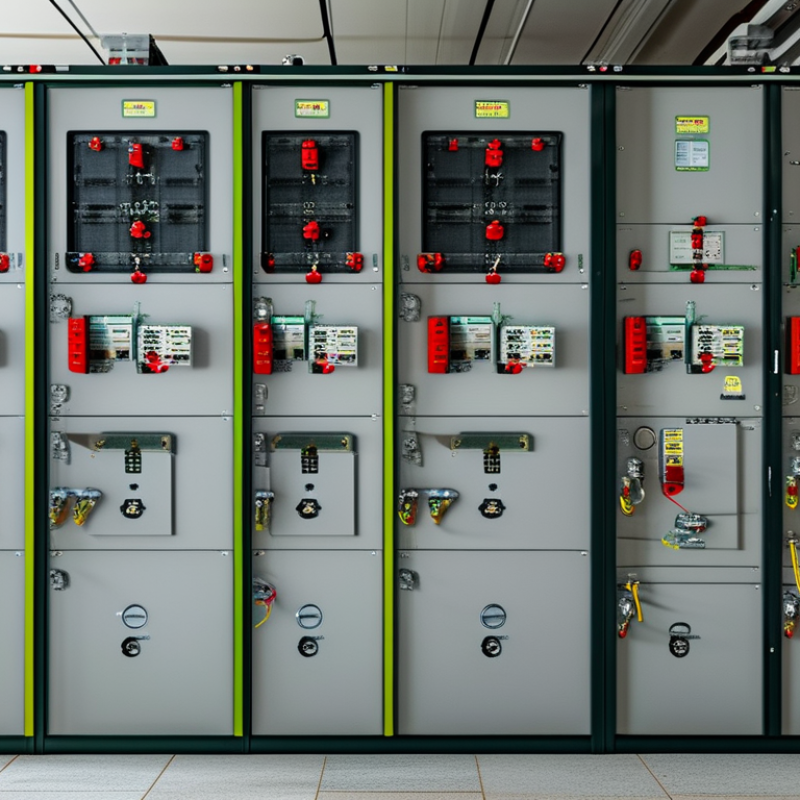
RMU switchgear is compact, medium-voltage equipment for distributing electricity safely from 3.3 to 36 kV. RMU means Ring Main Unit. It connects feeders in a ring, allowing power to reach a substation from different directions. If one cable develops a fault, operators can isolate that section and restore supply through the other route.
Common RMU types include load-break switch units, fuse-switch units, and circuit-breaker units. Many assemblies also contain an earthing switch and voltage indicators. Air-insulated, gas-insulated, and solid-insulated designs serve different site conditions. Gas-insulated units save space, while air-insulated units can simplify visual inspection and maintenance. The correct choice depends on fault levels, enclosure location, humidity, switching frequency, and local protection requirements.
RMUs serve apartment buildings, factories, renewable-energy sites, transport systems, and public utilities. Their sealed construction limits contact with live parts and reduces the risk of accidental exposure. Remote monitoring can also provide operating data before a failure becomes serious. In field inspections, however, compact equipment can encourage neglect. Cable terminations still need torque checks, insulation testing, and clear labeling. Protection settings must match the network, not a standard template. No design is perfect.
Engineers should verify short-circuit ratings, internal arc performance, grounding arrangements, and maintenance access against applicable standards. A small installation mistake can affect an entire feeder.
| Data Dimension | RMU Switchgear Type or Feature | Typical Range or Configuration | Primary Use | Key Benefits and Technical Notes |
|---|---|---|---|---|
| Voltage Class | Medium-voltage ring main unit | 3.3–36 kV | Primary and secondary medium-voltage distribution | Provides switching, isolation, protection, and supply continuity for distribution networks within the medium-voltage range. |
| Insulation Technology | Air-insulated RMU | Atmospheric air used as the main insulation medium | Indoor substations, utility networks, commercial buildings, and industrial sites | Generally offers straightforward inspection and maintenance access. The enclosure may be larger than equivalent gas-insulated designs. |
| Insulation Technology | Gas-insulated RMU | Sealed enclosure with insulating gas | Compact substations, urban networks, underground installations, and areas with limited space | Compact footprint, protected live components, and improved resistance to dust, humidity, and harsh environmental conditions. Gas selection and end-of-life handling must follow applicable regulations. |
| Insulation Technology | Solid-insulated RMU | Encapsulated insulation based on solid dielectric materials | Environmentally sensitive projects and compact medium-voltage substations | Can reduce reliance on insulating gases and provides protected primary components. Design-specific inspection and maintenance procedures are required. |
| Switching Function | Load-break switch RMU | Manual or motor-operated load-break switches | Feeder switching, sectionalizing, and transformer circuit isolation | Can interrupt normal load current but is not normally intended to clear high fault current without a separate protection device. |
| Protection Function | Fuse-protected RMU | Load-break switch combined with medium-voltage current-limiting fuses | Distribution transformers and small-to-medium transformer feeders | Provides economical short-circuit protection. Fuse selection must coordinate with transformer rating, inrush current, and network fault levels. |
| Protection Function | Circuit-breaker RMU | Vacuum circuit breaker with protection relay | Industrial feeders, larger transformers, renewable-energy collection systems, and critical loads | Allows repeated fault interruption, adjustable protection settings, remote operation, and improved selectivity compared with fuse-only protection. |
| Ring Configuration | Two-way ring main unit | Two ring switches plus one transformer or outgoing feeder way | Open-ring or interconnected distribution systems | Allows the load to be supplied from either direction after isolating a faulted cable section, helping maintain service continuity. |
| Ring Configuration | Three-way RMU | Two ring ways plus one protected transformer or feeder way | Typical compact distribution substations | Combines network sectionalizing with transformer or feeder protection in a single factory-assembled enclosure. |
| Ring Configuration | Four-way or multi-way RMU | Additional feeder, transformer, metering, or bus-coupler ways | Large commercial sites, industrial plants, and complex distribution nodes | Supports more outgoing circuits and operational flexibility, although the enclosure, protection scheme, and operating procedure become more complex. |
| Rated Current | Ring switch or feeder switch | Common equipment ratings include approximately 200–630 A | Medium-voltage cable feeders and ring networks | The selected rating must match continuous load current, cable ampacity, switching duty, ambient conditions, and applicable standards. |
| Short-Time Withstand | Short-circuit withstand capability | Common project values include approximately 12.5–25 kA for 1–3 seconds | Fault-duty withstand in distribution networks | The required value depends on the calculated prospective short-circuit current and the network protection-clearing time. |
| Frequency | Power-frequency operation | Typically 50 Hz or 60 Hz | Utility, industrial, commercial, and infrastructure networks | Frequency must correspond to the electrical system and the ratings stated on the equipment nameplate and technical documentation. |
| Cable Connection | Front-access cable compartment | Bottom or front cable entry depending on enclosure design | Compact substations and indoor or outdoor distribution installations | Supports practical installation and testing where rear access is restricted. Cable termination clearances must be maintained. |
| Earthing | Integrated earthing switch | Earthing switch associated with each cable or feeder way | Safe maintenance and cable testing | Provides a defined path to earth after isolation. Mechanical and electrical interlocks help prevent unsafe operating sequences. |
| Automation | Motorized and remotely controlled RMU | Motor operators, auxiliary contacts, sensors, and communication interface | Smart grids, unmanned substations, and distribution automation | Enables remote switching, fault isolation, network reconfiguration, and reduced restoration time when integrated with a suitable control system. |
| Metering | Metering or instrument-transformer compartment | Current transformers, voltage transformers, or voltage sensors | Energy measurement, protection, power-quality monitoring, and revenue metering | Provides electrical measurements for protection and operational control. Accuracy class and burden must suit the intended application. |
| Application | Utility distribution | Urban, suburban, underground, and overhead-to-underground networks | Sectionalizing feeders and supplying distribution transformers | Improves network flexibility and can limit the number of customers affected by a cable or equipment fault. |
| Application | Commercial and public infrastructure | Shopping centers, hospitals, campuses, airports, and office complexes | Internal medium-voltage distribution and transformer protection | Compact construction and coordinated protection help support reliable power delivery in space-constrained or high-occupancy locations. |
| Application | Industrial facilities | Manufacturing plants, mines, process facilities, and data centers | Motor feeders, transformer incomers, and plant distribution sections | Circuit-breaker versions can provide selective protection, remote operation, and easier integration with industrial power-management systems. |
| Application | Renewable-energy collection | Medium-voltage collector circuits for solar and wind installations | Combining multiple generation feeders and connecting them to a substation | Supports feeder isolation, protection coordination, and controlled connection of distributed generation to the medium-voltage network. |
| Environmental Design | Indoor RMU | Installed in a dedicated electrical room or prefabricated substation | Buildings and protected substations | Benefits from controlled temperature, humidity, and access conditions, which can simplify maintenance and extend service reliability. |
| Environmental Design | Outdoor RMU | Weather-resistant enclosure with suitable ingress protection | Outdoor substations, utility cabinets, and remote sites | Designed to withstand rain, dust, temperature variation, and ultraviolet exposure when correctly specified for the installation environment. |
| Safety Feature | Mechanical and electrical interlocking | Interlocks between switches, circuit breakers, and earthing switches | Preventing incorrect operating sequences | Helps reduce the risk of closing an earthing switch onto an energized circuit or accessing compartments before isolation and earthing. |
| Overall Benefit | Compact, modular distribution equipment | Factory-assembled metal-enclosed switchgear | Medium-voltage network expansion and modernization | Combines switching, protection, isolation, and optional automation in a compact arrangement, helping reduce installation time and improve operational continuity. |
We’re here to help and answer your questions.